
how to soft wash a roof
The importance of cleaning your roof is quite high, both for durability and for how your home looks from the street. Learning how to soft wash a roof gives homeowners a safer way to remove buildup without damaging shingles. Soft washing relies on gentle sprays and cleaning solutions rather than harsh pressure. That’s why many people now choose it instead of traditional pressure washing.
There may be black streaks or green moss up there after a time. Those are of the algae and other growth in wet weather. But delicate washing strikes them with appropriate measures. Any person can be taught how to do it either by performing it himself/herself or by getting others to assist them.
It is a guide to the basics and details. You will find out everything about what soft washing is and what the last rinse is. Besides, it is easy, and tips on solutions and safety are provided. Begin now to have a fresher roof.
What Soft Washing Is and Why It’s Used
Soft washing means using low water pressure combined with special cleaning mixes to clean roofs. Unlike high-pressure washing, which can harm the surface, this method focuses on the chemicals to do the work. For instance, it kills off things like algae without scraping or blasting. People pick it because it keeps the roof materials in good shape.
Homeowners turn to soft washing to make their roofs last longer. When dirt and growth build up, they can cause real damage over time. But with this approach, you remove those problems gently. Plus, it helps the house look nicer from the street.
Experts in roofing often suggest soft washing for upkeep. It turns out cheaper than getting a whole new roof. And the clean stays put for a while. So, many see it as a smart way to handle roof care.
When Soft Washing Is the Best Choice for a Roof
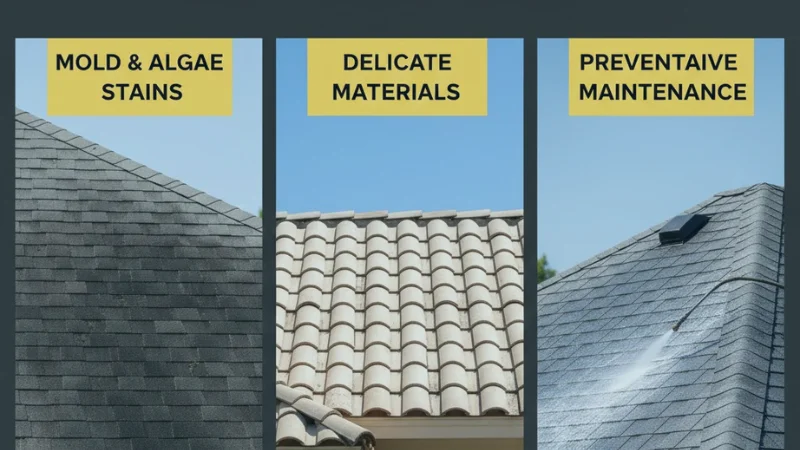
You should go for soft washing if your roof shows signs of mold or dark spots. High pressure might rip off parts of the shingles, so low pressure is safer. For example, on roofs that slope a lot, it reduces the chance of accidents. It fits best when you want to clean without any rough treatment.
Pick a day with calm weather for the job. Rain can wash away the cleaner too soon, and hot sun might dry it out fast. However, mild days let the solution work as it should. Also, older roofs handle this method better than newer, tougher cleaning.
Roof Materials That Benefit Most
Asphalt shingles do really well with soft washing. The cleaners lift dirt without pulling up the edges. Metal roofs clean up nicely, too, removing rust marks safely. And for clay tiles, it preserves their look without cracks.
Wood shakes stay whole because there’s no hard force involved. Strong blasts could split them apart, but soft washing avoids that. Slate roofs keep their strength intact during the rinse. Each type holds onto its coating better this way.
Always try a small spot first on whatever material you have. That way, you see how it reacts. Roofing NJ pros can guide you on what fits your setup. It helps dodge any surprises down the line.
Problems Soft Washing Helps Remove
Algae grows in wet spots and leaves black lines on roofs. But soft washing uses mixes that get to the roots and kill them off. Lichen spots disappear as well. So, the roof gets back its original shade.
Pollution dirt piles up slowly from the air. The solution breaks it into bits that rinse away. Things like bird mess or sticky sap come off easily, too. As a result, everything looks fresh again.
Doing this regularly stops water from getting trapped. Growth like moss holds dampness that leads to wood rot. However, soft washing clears it out before trouble starts. Your home stays solid longer.
Preparing the Roof for Soft Washing
Start by clearing stuff around the house base. Move away any plants, chairs, or kids’ toys from where water might drip. If something can’t move, cover it with plastic. This keeps everything safe from the cleaning mix.
Look over the roof for any broken parts or loose bits. Make fixes right away if you spot them. You can use binoculars from the ground for a safe check. But if you need to go up, wear a safety harness.
Soak the ground plants and lawn with water beforehand. That dilutes any cleaner that runs off. Shut down sprinklers and set up your ladder securely. Have all your gear ready, like the hose and pump.
Step-by-Step Guide to Soft Washing a Roof
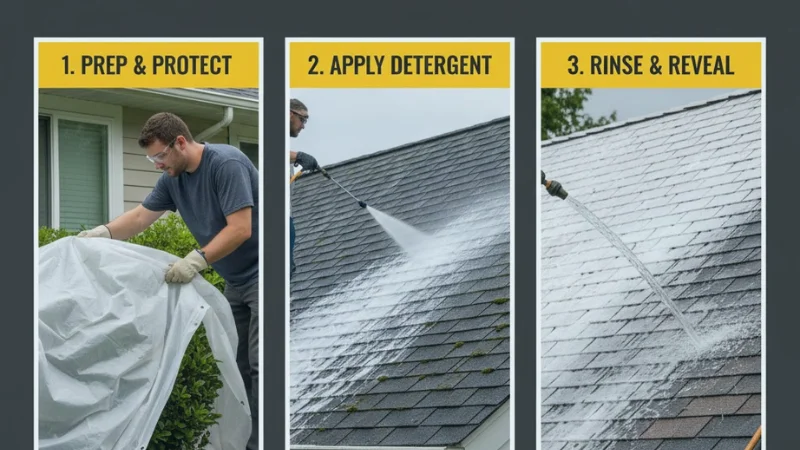
Begin by putting on safety items and getting the tools set. Slip into gloves, eye protection, and shoes that grip well. Hook up the soft wash pump to a low-pressure spray tip. Then mix your cleaner in the holding tank.
Spray starting from the bottom to stop drip marks. Cover the whole area evenly across the shingles. Break it into parts so you manage better. Hold the spray at arm’s length.
Let the mix sit for the right time after spraying. Rinse it off with care next. Look over for any unclean spots. The roof air-dries on its own afterward.
When learning how to soft wash a roof, patience matters. Apply the solution evenly and give it enough time to work. Rushing the process reduces effectiveness and may leave stains behind.
Applying the Cleaning Solution
Grab a pump sprayer to spread it out smoothly. Pump the mix right onto the rooftop. Work from low points up higher. This stops dirty runoff over fresh parts.
Aim for one gallon covering about 100 square feet. Bump it up if stains are bad. You can let it sit longer for tough dirt. The mix seeps into the bad spots.
See bubbles form, which means it’s active. Don’t spray too much over the sides. Clean gutters separately if they have guards. For a normal house, this takes around half an hour.
Allowing the Solution to Dwell
Dwell time is critical when mastering how to soft wash a roof correctly. Most solutions need 15–20 minutes. Don’t let them dry completely.
Shade sunny areas to keep it wet longer. Wind might speed up drying, too. Spray more if parts get dry. This makes sure it cleans deep.
The bad stuff darkens or foams up when ready. That’s your cue to rinse. Waiting properly avoids half-done jobs. You end up with spotless shingles.
Rinsing With Low Pressure
Hook a low-flow tip to your garden hose for rinsing. Begin at the peak and go downward. It flushes out all the leftover bits. Keep the force below 500 PSI for safety.
Do the edges and gutters at the end. Catch drips in buckets when you can. That cuts down on the mess in the yard. Stubborn areas might need extra rinses.
If rain is coming, pat dry low spots with a cloth. Step around to inspect the cleanliness. Fix any remaining stains. Now the roof shines like new.
Cleaning Solutions Used in Soft Washing
Mixes often have bleach watered down with added soaps. Those soaps make it cling to the dirt. Sodium hypochlorite zaps algae quickly. Brands differ in how much to mix, like using SH types.
Throw in detergent for a deeper clean. It cuts through greasy buildup. Try your mix on a tiny section first. Stick to the safety info provided.
Keep the mixes in shady, cool spots. Fresh ones perform better every time. Toss out extras the right way. It makes the whole thing kinder to nature.
Biodegradable Options
Seek out cleaners made from plants that break down on their own. They skip the strong stuff. Products like Simple Green have versions safe for roofs. No harm to the ground below.
Some use enzymes that eat away at natural dirt. Tiny bugs in them tackle moss. It takes more time but stays mild. Use with a soft rinse for a complete job.
Scan for eco labels on packages. These choices cut back on pollution. Great for houses by lakes or streams. They might cost extra, yet the good lasts.
Keeping Plants, Pets, and Surroundings Safe
Hose off plants well if they get splashed. Lay down covers to block the spray. Mix in stuff to neutralize runoff. Leaves stay healthy that way.
Lock pets indoors while you work. Let spots dry before they come out. Clean their feet if they step in wet areas. Use barriers to keep the zone clear.
Tell next-door folks if the spray might drift. Set up shields on windy days. Obey area rules on chemicals. Putting safety up front means no worries later.
Hiring a Professional vs. Doing It Yourself
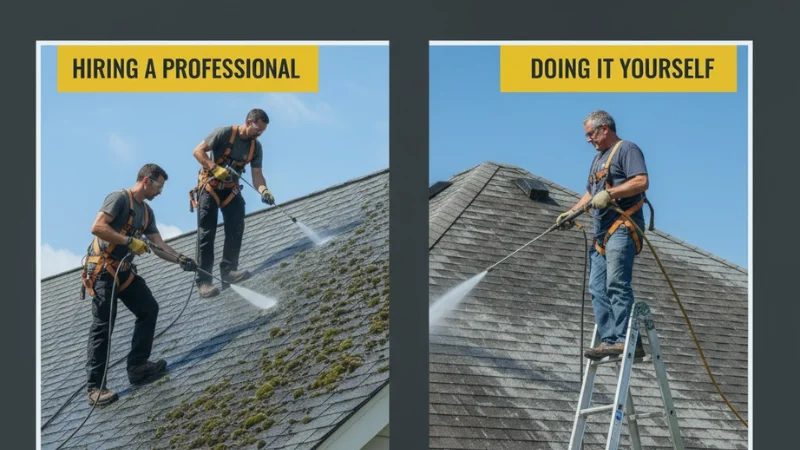
Tackling it yourself cuts costs at the start. You can rent gear from places like Home Depot. Get cleaners from stores or the web. Yet it eats up your hours and needs some know-how.
Pros come with skills and their own equipment. They climb safely without issues. Their coverage handles mishaps. And the clean holds up better from their touch.
Think about dangers like slipping or bad mixes. Steep roofs call for experts. Flat ones might work for DIY. Check your own abilities first.
Advantages of Professional Soft Washing
They bring heavy-duty pumps and strong cleaners. Jobs go faster with better outcomes. Pros catch problems like drips early. No trial and error.
Many offer guarantees on their work. Groups like NRCA certify reliable ones. They gear up right for high spots. You get free time back.
Cleaning comes out even, no lines. They deal with trash correctly. Follow-up looks make sure you’re happy. It brings ease overall.
Tips for Choosing a Reliable Service
Seek out past customer stories and read reviews on Yelp. Check if they join local roof groups. Confirm their papers and protection. You stay covered that way.
Collect a few price offers to compare. Ask what cleaners they pick. See photos of old jobs. Open talk creates confidence.
Book in slow seasons for deals. Ask how they clean up after themselves. Get it all in writing. Pick ones who respond well.
Final Thoughts on How to soft wash a roof
Soft washing maintains roofs in top form and neat. Do each step with care for great results. Pick DIY or pro, but safety comes first. Steady work stops major fixes.
Look at your roof’s state before you begin. Talk to pros if in doubt. A clean roof raises the house’s worth. Upkeep brings rewards over the years.
Keep an eye on the weather for the best days. Items like soft wash sets make it doable. Savor the clean view. Your place benefits big.