What Is Torch Down Roofing?
Torch-down roofing uses special sheets made from modified bitumen, and for many property owners asking what is torch down roofing is, it’s a proven system for flat or low-slope roofs. Workers heat these sheets with a propane torch to stick them on flat roofs. So, the heat melts the material and creates a strong seal against water. This method fits well for buildings with little slope.
Many people choose torch down roofing because it handles weather changes without breaking. The sheets include asphalt mixed with rubber or plastic for extra strength. However, it needs skilled workers to apply it correctly. Otherwise, problems like leaks can happen over time.
Torch down roofing often appears on commercial places like stores or offices. But some homes use it too if the roof is flat. Because of the torch, safety comes first during setup. And the final result keeps rain and snow out effectively.
You see torch down roofing in areas with heavy rain or cold winters. The material bends a bit when temperatures shift. So, it lasts longer than some other options. Plus, it adds a layer of protection to the whole building.
What Is Torch Down Roofing and Why Is It Used
When people ask what is torch down roofing is, the answer comes down to durability and waterproofing. The system relies on heat-activated sheets that bond directly to the roof surface. This creates a seamless barrier that resists moisture, wind, and temperature changes.
The heat from the torch activates the modified asphalt in the sheets. Because of this, the roof becomes waterproof right away. However, the process takes time to cover the whole area. And workers must overlap edges carefully for a solid connection.
Once heated, the sheets cool and harden into a tough layer. So, water runs off instead of soaking in. But if the torch isn’t used evenly, weak spots might form. Therefore, training helps ensure everything sticks well.
In cold weather, the material stays flexible thanks to added polymers. This prevents cracks from freezing temperatures. Also, the top layer often has granules to block sun damage. Consequently, the roof holds up better over the years.
Common Materials Used in Torch Down Systems
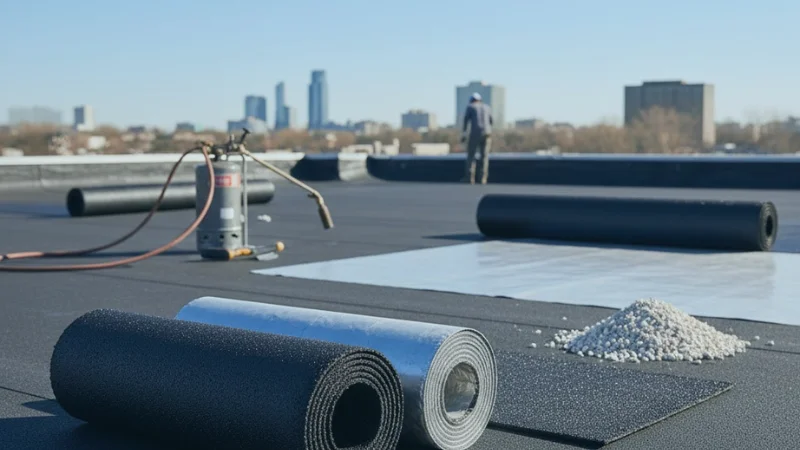
Modified bitumen forms the main part of torch-down roofing. It mixes asphalt with polymers like APP or SBS for better performance. So, APP adds plastic qualities that resist heat well. Meanwhile, SBS brings rubber-like stretch to handle cold.
Base sheets provide the first layer in these systems. They include fiberglass or polyester for reinforcement. Then, cap sheets go on top with granules for extra shielding. As a result, the whole setup fights off water and sun.
Propane torches are key tools here. Workers hold them to melt the bitumen during application. However, safety gear protects against burns. And adhesives sometimes help if torching isn’t enough.
Vapor barriers sit under the sheets to stop moisture buildup. Insulation boards add warmth control, too. Because of these, the roof saves energy in buildings. Plus, flashing materials seal edges around pipes or vents.
Types of Torch Down Roofs (Two-Layer vs. Three-Layer)
Torch-down roofs come in two main kinds based on layers. A two-layer setup uses a base and one cap sheet. However, a three-layer adds another cap for more protection. So, the choice depends on how much strength you need.
Both types use the same heating method with a torch. But the extra layer in three-ply makes it thicker overall. Therefore, it suits places with rough weather. And the top often has granules in the three-layer version.
Costs differ between these options. Two-layer systems save money up front. Yet, three-layer ones last longer in the end. As a result, building owners weigh budget against lifespan.
Installation time varies, too. Two layers go on faster. However, three provide better seals against leaks. So, experts recommend three for bigger roofs.
Two-Ply System Basics
A two-ply system starts with a base sheet fixed to the roof deck. Then, a smooth cap sheet gets torched on top. So, this creates a simple waterproof barrier. But it might need roof leak repairs sooner than thicker setups.
The base offers support while the cap seals everything. Because of the torch, bonds form tightly and quickly. However, overlaps must be perfect to avoid water entry. And workers check for bubbles after cooling.
This system works well for smaller buildings. It uses less material overall. Yet, it still handles basic weather needs. Therefore, it’s a common pick for budget projects.
In warm areas, two-ply holds up fine without extras. The modified bitumen bends with heat changes. Also, it’s light, so roofs don’t sag. Consequently, the setup goes smoothly.
Three-Ply System Benefits
Three-ply systems add a granulated cap on top of the smooth one. So, this boosts fire resistance right away. However, it takes more time to apply all layers. And the granules help reflect sun rays, too.
Durability stands out in three-ply roofs. The extra layer fights wear from wind or debris. Therefore, leaks happen less often. But costs rise with the added material.
In cold spots, three-ply prevents cracks better. The thickness keeps warmth inside buildings. Also, it reduces noise from rain. As a result, owners see lower bills over time.
Maintenance stays easy despite the layers. Patches fix small issues quickly. Yet, the system lasts 20 years or more. So, it’s worth it for long-term use.
How Torch Down Roofing Is Installed
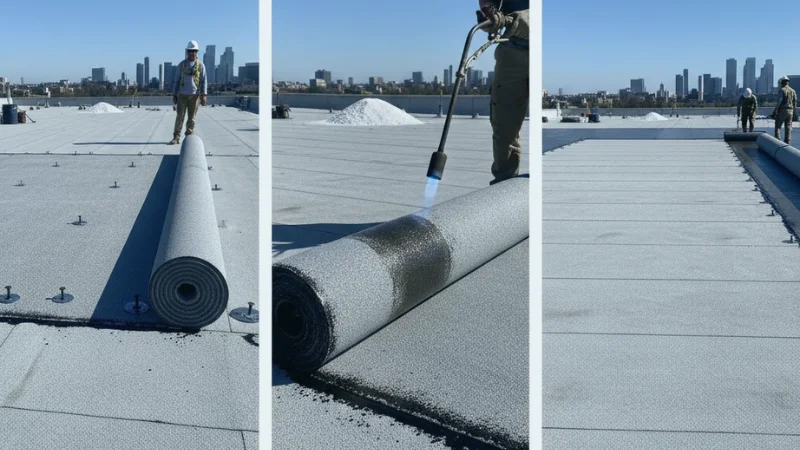
Installing torch-down roofing begins with checking the roof deck. Workers clean off dirt and old stuff first. Then, they add insulation if needed for warmth. So, this sets a good base for the sheets.
The process uses a torch to heat each layer. But safety rules guide every step. However, the weather must be dry to avoid trapped water. And tools like rollers help press sheets down.
After the layers bond, inspections catch any weak areas. Edges get special attention to seal tightly. Therefore, the roof stays dry inside. Plus, it takes a team to cover large spaces.
Preparing the Roof Surface
To prepare, remove all loose debris from the deck. Then, install a vapor barrier to block moisture. So, this keeps the system dry underneath. However, skip this if the roof is already sealed.
Insulation boards go next for energy control. Workers screw or glue them in place. Because of this, the building stays cooler in summer. And the surface becomes even for sheets.
An overlay board tops the insulation. It provides a flat spot for bitumen. Yet, it must drain water well. Therefore, slopes are checked before moving on.
Final checks ensure everything is level. Tools measure for accuracy. Also, primers might coat the board. As a result, bonds hold stronger.
Laying and Heating the Layers
Laying starts with the base sheet unrolled. Workers torch the bottom to stick it down. Then, overlaps get heated for no gaps. So, this forms the first defense layer.
The cap sheet follows in the same way. Heat makes it fuse to the base. However, the three-layer adds another cap with granules. And each step overlaps properly.
Cooling happens fast after torching. Rollers press out air pockets. Because of careful heating, seams stay watertight. Yet, workers watch for even melts.
Multiple passes cover the whole roof. Teams work in sections. Also, resting allows the sheets to relax. Consequently, wrinkles don’t form.
Finishing Edges and Flashing
Finishing involves sealing roof edges with bitumen strips. Then, metal flashing covers them for strength. So, this stops water from sneaking in. However, curves need extra cuts.
Around vents, self-stick membranes go first. Heat bonds them securely. Because of flashing, leaks avoid these spots. And primers help adhesion.
Inspections test all seals after. Tools check for lifts or holes. Yet, fixes use more heat if needed. Therefore, the roof is ready for the weather.
Granules scatter on exposed areas sometimes. This adds grip and looks. Also, it protects from the sun. As a result, edges last longer.
Pros of Torch Down Roofing
Torch down roofing blocks water well on flat surfaces. The sealed layers let rain slide off. So, buildings stay dry inside. However, it needs good drainage too.
It holds up for many years with proper care. Materials resist cracking in heat or cold. Therefore, replacements happen less often. And repairs cost little.
The system bends with temperature shifts. Polymers in the bitumen allow this. Yet, it keeps its shape overall. As a result, it fits various climates.
Strong Water Resistance
Strong water resistance comes from fused seams. No nails or screws poke holes. Then, water can’t get through easily. So, flat roofs avoid puddles.
In rainy areas, this keeps interiors safe. Layers overlap to guide flow away. However, clogs in drains weaken it. And regular clears help maintain it.
The modified bitumen swells a bit but seals back. This stops small leaks from growing. Because of heat bonds, it’s reliable. Yet, pros install for best results.
Granules on top shed water faster. They add a rough surface. Also, they cut the sun’s heat. Consequently, resistance improves.
Long-Term Durability
Long-term durability shows in how it weathers storms. The reinforcement inside fights tears. So, wind doesn’t lift it easily. However, heavy impacts need checks.
Over the years, it fades less than some roofs. UV protection from granules helps. Therefore, color stays put. And strength remains high.
In snow, it handles weight without sagging. The thickness supports loads. Yet, clearing buildup extends life. As a result, it serves 15 to 20 years.
Multiple layers back each other up. If one wears, others protect. Also, it’s tough against hail. Consequently, durability wins out.
Flexibility in Changing Temperatures
Flexibility lets the roof expand in heat. Polymers like SBS make this possible. Then, it shrinks back in cold without breaks. So, seasons don’t harm it.
In hot spots, APP types work best. They resist melting better. However, SBS suits freezing areas. And both keep the seal intact.
Temperature swings test other materials more. But Torch Down adapts smoothly. Because of this, cracks are rare. Yet, extreme changes need monitoring.
The system moves with the building, too. Settling doesn’t split it. Also, it’s light on structures. As a result, it stays flexible long-term.
Low Maintenance Needs
Low maintenance means few fixes over time. Clear debris twice a year. Then, check seams for wear. So, problems get caught early.
Patches use small sheet pieces torched on. No big tools needed. However, pros do it safely. And costs stay down.
The surface resists dirt buildup. Granules help clean the rain wash it. Because of its strength, walking on it doesn’t damage it. Yet, avoid sharp objects.
Inspections take little time. Look for bubbles or lifts. Also, drains stay open. Consequently, maintenance is simple.
Cons of Torch Down Roofing
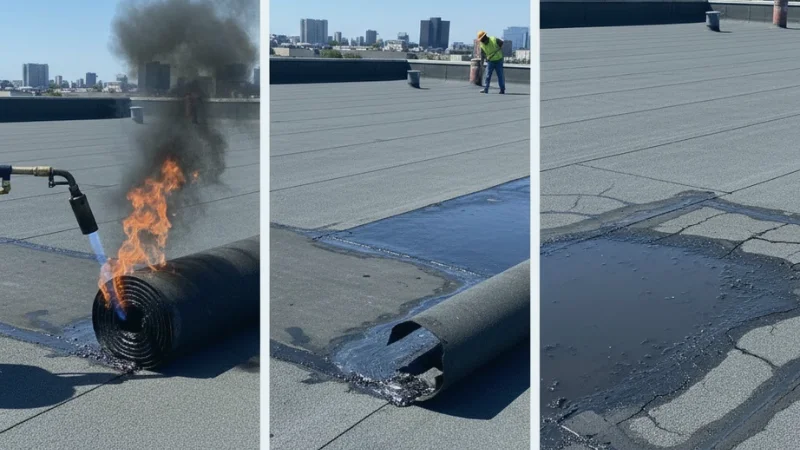
Torch-down roofing carries fire risks from the torch. Open flames can spark if not careful. So, workers need training always. However, accidents are rare with pros.
Seams might not seal if heated wrong. Water slips in then. Therefore, quality checks matter a lot. And fixes add extra work.
The material punctures from sharp things. Debris or tools cause holes. Yet, patches mend them quickly. But prevention saves trouble.
Fire Risk During Installation
Fire risk rises when torching near wood. Sparks fly if the wind blows. Then, fire watches guard after work. So, safety plans cut dangers.
Dry weather helps avoid flares. But rain delays the setup. However, certified teams handle it best. And extinguishers stay close.
Overheated sheets can smoke or burn. Control flame size for this. Because of care, most jobs go fine. Yet, insurance covers pros.
Buildings with gas lines need extra caution. Shutoffs happen first. Also, permits check rules. Consequently, risks drop.
Possibility of Improper Seams
Improper seams form from rushed heating. Edges don’t bond fully. Then, the wind lifts them over time. So, slow work ensures strength.
Overlaps under 3 inches weaken too. Measure each one. However, the three-layer forgives more. And tests pull to check.
Wet spots under cause bubbles. Dry all before starting. Because of this, seams stay flat. Yet, reheats fix issues.
Experience spots bad seams early. New workers learn fast. Also, tools aid in even heat. As a result, problems lessen.
Vulnerability to Punctures and Scuffs
Punctures happen from dropped tools. The bitumen tears easily then. So, careful walking prevents this. However, reinforcements inside the limit spread.
Scuffs come from foot traffic. Rough shoes mark the surface. Then, the granules wear off spots. But light use keeps it smooth.
Hail or branches cause dents, too. Check after storms. Because of quick patches, damage stops. Yet, thick layers resist better.
Debris buildup scuffs over time. Clear often for this. Also, soft mats protect during work. Consequently, vulnerability drops.
When Torch Down Roofing Makes the Most Sense
Torch-down roofing fits best on flat commercial roofs. Water drains slowly there. So, the seal keeps leaks away. However, homes with slopes might not need it.
In cold or hot places, it makes sense. The flexibility handles shifts. Then, buildings save on heat bills. And durability pays off long run.
For big areas like warehouses, it’s practical. Set up covers space fast. Yet, pros manage the torch safely. Because of this, it’s a top choice.
When budgets allow mid-range costs, pick it. Materials aren’t too pricey. Also, low fixes add value. Consequently, it suits many projects.
Is Torch Down Roofing a Good Fit for Your Home or Building?
Torch-down roofing works for flat-roof homes in wet areas. It blocks water well. But check if your slope fits first. So, measure before deciding.
For buildings like apartments, it’s often a good fit. The strength holds up to use. However, fire codes must allow torch work. And pros confirm safety.
If low maintenance appeals, consider it. Repairs are simple. Then, time is saved over the ears. Yet, compare with other types.
Costs make it fit for mid-size projects. Materials last long. Because of energy savings, bills drop. Also, warranties cover 15 years or more.